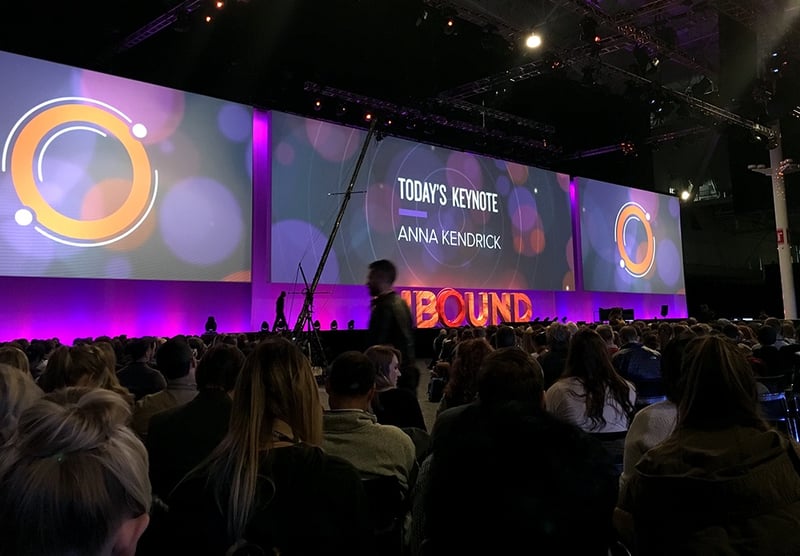
This week, I attended my first ever Inbound conference. I laughed. I cried. I met Anna Kendrick and fangirled hard. I raced down long aisles to score front row seats to INBOUND Rocks with Trevor Noah and Ali Wong. And friends, I don’t run unless a tiger is chasing me, so you know it’s serious.

I made new besties, connected with fellow HubSpot partners, hoarded free swag. I was on my feet all day, every day, rushing from one session to the next. But the electrically, emotionally, enthusiastically charged environment filled with some of the most inspiring and creative entrepreneurs, ambitious marketers, celebrities, athletes, authors, comedians and industry leaders fueled my interest and propelled me through the day. Alec Baldwin, Gary Vaynerchuk, Serena Williams, Brian Halligan, Dharmesh Shah, and did I mention Anna frigging Kendrick (ok, I’m obsessed)? How can you not love and be wildly excited about that lineup?
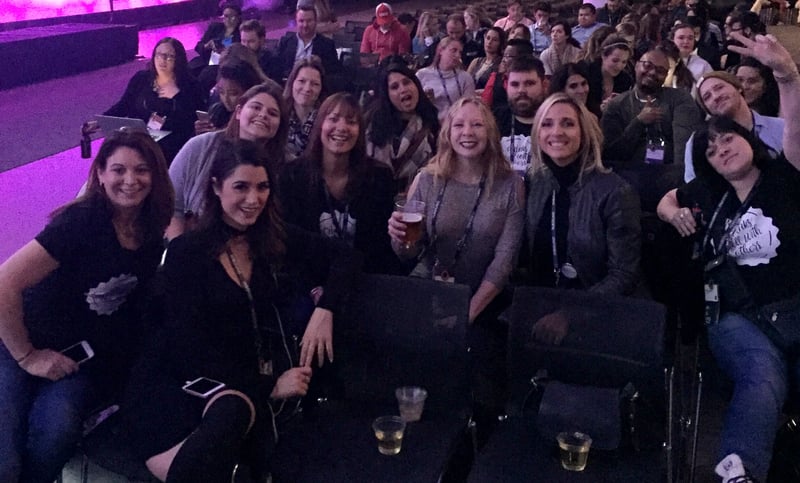
It was an exhausting but illuminating experience. I came away armed with valuable insights and actionable advice on how to improve my content, social media, emails and all inbound marketing initiatives to expand our reach, generate more qualified leads and convert those leads into loyal customers.
If you were unable to attend INBOUND 2016, or you’re looking for a handy roundup of the most valuable takeaways, don’t worry. I’ve got you covered. I’ve handpicked the most valuable takeaways from the breakout sessions, spotlights and keynotes my team and I attended to help you take your marketing up a notch in 2017.
1) Marketing isn’t a sprint; it’s a marathon
We live in an “I want it now” society. We binge watch entire seasons on Netflix rather than impatiently waiting for new episodes to come out. If a website doesn’t load in less than 5 seconds, we call it quits and swear off the website forever.
And the need for speed is felt not only by end users, but also marketers. It carries over into our marketing campaigns, and we feel pressured to market better, faster and smarter to keep pace in a rapidly changing industry and competitive market. But there are times when slow and steady wins the marketing race.

while 72% of marketers are looking at the long-term (not a quick hit), only 32% are consistently focused on audience versus brand.
Ann Handley, Chief Content Officer at MarketingProfs, led a brilliant breakout session, ASAP (As Slow As Possible), that explored how you can create stronger and more sustainable marketing by slowing down. She shared that while 72% of marketers are looking at the long-term (not a quick hit), only 32% are consistently focused on audience versus brand.
Key takeaway: Get out of your head and get into the heads of your customers. Internalize the needs of your clients and craft targeted, relevant content speaking to those needs. Take the time to drill into your marketing programs, find out what works, scrap what doesn’t, and try new or creative tactics when appropriate.
2) Social media surpasses all TV advertising
Think back to the last time you watched a TV commercial. I’m not talking about your eyes flickering briefly over the screen or texting, Snapchatting or Instagramming while the commercial blares in the background. I mean giving your full and undivided attention to the entire clip of a Jeep driving over rough terrain without a single splash of mud on its exterior (talk about inauthentic).
People rarely watch or respond to commercials anymore. According to a 2014 study from Arris, 60% of respondents download or record shows so they can fast forward through commercials. Another study by Communicus showed that Super Bowl ads have lost their effectiveness: 80% of these ads don’t increase sales for the brands.
So, what does this decreased viewership mean for your marketing? Well, as Brian Halligan, HubSpot CEO and founder, put it succinctly during his keynote at INBOUND 2016:
“If you’re not marketing inside Zuckerburg’s world, you might as well market from inside a trash can.”
Rather than spending exorbitant amounts of money on a commercial viewers skip over anyway, put your money where the people are: social media. Advertise your brand on the social platforms your target customers are active on, whether that’s Pinterest, Instagram, Twitter or all of the above.
Key takeaway: Hurry and advertise on social before the big-name brands catch on. Once they do, ad prices will soar, and you may lose your ability to cost-effectively compete against big brands who have yet to discover the full advertising potential of this medium.
3) Aim for customers’ hearts, not their wallets
It’s a no-brainer, right? If you want consumers to buy from your company (and why wouldn’t you?), you need to build trust and convince them you are the right one to solve or serve their need. But it’s easier said than done.
Building up trust takes considerable time and patience. It takes careful planning and the right types of content. What kind of content, you ask? You can get your customers to trust you, or even love you, by writing straightforward, honest and human copy.
“When you're 'trying' to create something authentic, it doesn't work. People can smell it on you.”
As Beth Dunn, UX editor at HubSpot, put it during her session, Tell Your Story: Give Your Brand A Heart, “Customers can spot insincerity from a mile away.” Anna Kendrick also shared her thoughts on the subject during her keynote, “When you're 'trying' to create something authentic, it doesn't work. People can smell it on you.”
Your writing needs to tell a story that resonates deeply with customers. It needs to sound like it was written for humans, not robots. According to Beth Dunn, all of your content (marketing emails, guides, blogs and so on) should be:
- Clear: Writers should always strive for clarity. Business owners and marketers love the words “utilize,” “employ” and “leverage.” They make us sound smarter and more professional. But, shorter words like “use” send the same message in fewer syllables.
The same goes for sentences and paragraphs. Write scannable content for today’s online readers and tighten up your paragraphs and sentences. Don’t be afraid to turn a complex or long sentence into 2 sentences.
Confine yourself to paragraphs of 2-3 sentences max. All of the above measures will help you work towards sharp, clear and easy-to-understand writing.
- Humble: Humility never hurt anyone, including your brand. When writing any content, watch out for the use of “we,” “I” and “our.” Instead, think in terms of “you” and “your.”
Switch it up and change the phrases “I am thrilled to present” or “We are proud to announce.” Swap around the point of view and make the customer the hero of your brand’s story. For example, you could say, “You’re going to love XYZ.”
- Human: Are you approaching content writing all wrong? This may be the case if you talk in hyperboles (everything has to be changing everything forever!) or refuse to use contractions (sounds robotics and not at all human).
Here’s what you can do to make your writing sound more human and personal. Look out for “cannot”, “it is,” “you are” and so on and make these contractions. Also, talk about how your product or services will make tasks faster or easier rather than how they will change EVERYTHING.
- Kind: The last thing you want to do is make your readers or potential customers feel uneducated or behind the times. But that’s exactly what you’re doing when you say, “You’ll finally learn how to do X.” The implication is that the reader has been fiddling around this whole time with little to no idea of what they’re doing.
Instead, talk about how they’ll be better and how their company or content or email marketing will improve. Avoid talking about constant failures or crappy life problem statements: “Ugh, Mondays. Don’t get me started.” Focus on past successes and how they can build on that, what you have in common, and things that bring all of us joy. For example, you could say “Think about how much time you could save by doing X.”
If your content doesn’t satisfy each of these categories, return to the drawing board (or writing table) and repurpose and rework your content until it sounds sincere.
Key takeaway: Write targeted, relevant content that speaks to your prospects and customers’ interests, challenges and motivations. Write in their language, on their terms and with their needs in mind. By doing this, you’ll be one step closer to creating a strong, lasting emotional connection with your audience.
Let’s be honest. INBOUND 2016 is an exhausting, frenzied experience. But it’s worth every last second of broken heels, spilled coffee and headlong racing to a session you desperately need to attend but know you’re unforgivably late to (this never happened to me…). I walked away with a mind crammed full of new ideas and strategies I couldn’t wait to turn into tangible to-dos once I returned to work.
I’m excited to implement all of the amazing knowledge I learned and improve our content marketing initiatives, and I want to help you do the same because us marketers have to stick together. That’s why I’m sharing our Top 5 Reasons Your Marketing Is Not Working guide to inspire you, fire up your creativity and, hopefully, help you feel as adrenalized about marketing as I did at INBOUND 2016.