
It doesn’t matter what you’re selling, and it doesn’t matter how.
If it doesn’t start with an effective mobile marketing strategy, you’re already doing it wrong. In today’s smartphone-driven world, mobile marketing has become a vital commodity for establishing new revenue streams—ones that are just waiting to be taken advantage of.
Mobile will soon be the number one platform across the globe, but too many companies have failed to cater to the growing number of mobile devices in use. And regardless of how you currently market to your buyer personas, it’s imperative that you include mobile tactics if you want to be successful.

Why should you include mobile tactics in your marketing strategies?
The smartphone is the future of digital marketing.
Before, marketers would have to complete extensive research into consumer interests, trends, activities, and timing… and that was just to figure out when it was best to engage your audience. You needed to not only entice consumers through engaging copy or ads, but also needed to ensure these ads found the right eyes at the right times. But what if you had a way to reach these consumers 24 hours a day, seven days a week—from only an arm’s length away?
What’s more personal than that?
These smartphones represent a significant channel for digital marketers to use to engage their audiences. We now spend more time looking at our phones than we do watching television… television! The problem, however, is that digital marketers aren’t developing effective strategies to take advantage of the nation’s newfound reliance on mobile technologies. Why is this problematic?
For starters, smartphone sales are starting to lap PC sales. In fact, mobile sales from the world’s 500 leading retailers in mobile commerce reached $84 billion in 2014—up 80% from $47 billion in 2013.
As smartphones become more affordable for the average consumer, the adoption of these devices becomes more mainstream as well. 60% of today’s global smartphone owners use their device as their primary Internet source. If consumers can’t afford a PC or laptop, smartphones are the next best choice for those looking to access the World Wide Web.

With the Internet in constant reach, users have access to a wealth of information at their fingertips—whether they’re looking for local professional services, or deciding which brand of detergent is better for grass stains. So it should come as no surprise that four out of five smartphone owners use their phones to influence purchasing decisions.
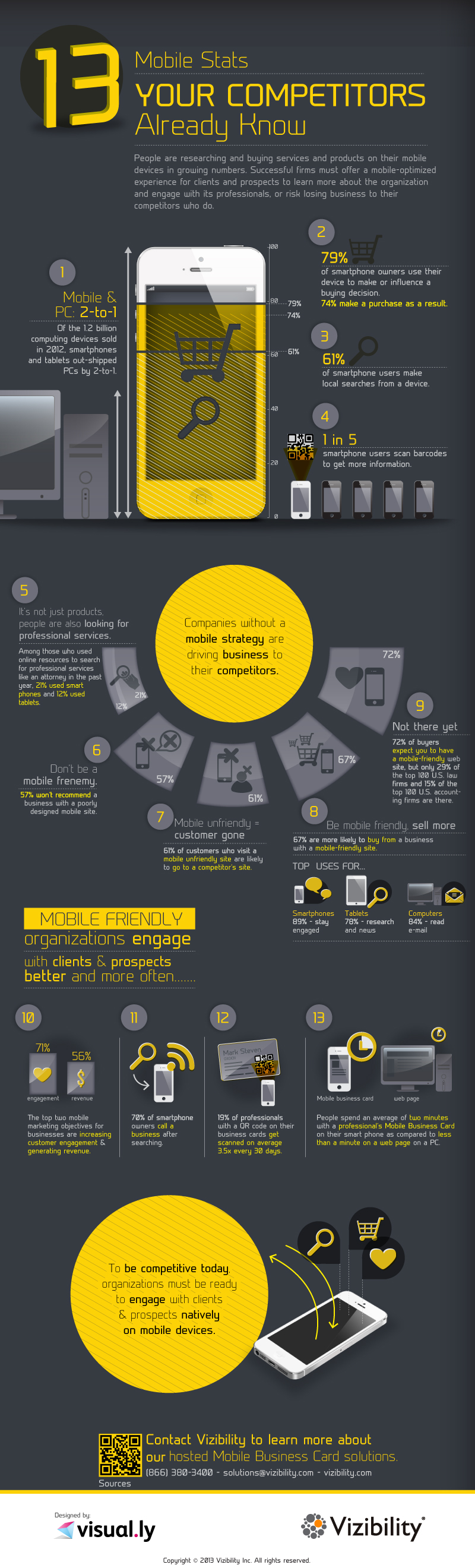
Clearly, smartphone usage is at an all time high. But smartphone adoption isn’t the only reason to focus your attention on attracting (and engaging) your mobile audience.
Search engines like Google are placing increasing importance on the value and user experience behind websites that are optimized for mobile use. Google is gearing up for a paradigm shift, and savvy business owners (i.e. those that are paying attention to the growing mobile market) are doing the same.
Google is so sure that mobile is the future, they’ll soon begin penalizing the mobile SEO ranking of site owners who fail to make their website responsive by April 21!
The onus is now on marketers to change the way they view and value mobile marketing. The smartphone market is growing, and mobile use looks like the new norm for digital content. Marketers need to realize that, although it may seem challenging initially, sitting down with your team and building an effective mobile strategy can translate to new sales and customers.
The sooner marketers can realize this and adapt, the better prepared they’ll be in the long run.