 They say to never judge a book by its cover, but about judging a website by its homepage or the first page that opens from a search? It happens all the time. In fact, most people spend all of 3-5 seconds evaluating a website and deciding whether or not they want to stay on the site.
This is commonly referred to as “The Blink Test”. Malcolm Gladwell, the best-selling author of Blink, explores the concept of “thin-slicing” in which humans use very limited amounts of information to make decisions. In the book, he argues that the conclusions that people draw in those first few seconds are actually quite accurate, perhaps even more accurate and superior to those drawn after careful and lengthy analysis.
Pretty intimidating concept: that people can accurately determine everything they need to know about your website in just 3-5 seconds. You spend months on a website design and years maintaining the site for a judgment to come down to 3-5 seconds. So how do you create a website that passes “The Blink Test”?
The first step is to determine your website’s “Blink Test” grade. Look for your website’s bounce rate where you get your website metrics. Google Analytics defines the bounce rate as “percentage of visits that go only one page before exiting a site”. A higher than average bounce rate indicates that the page in question fails to capture the viewer’s attention. So, what are some of the factors that contribute to whether or not a viewer’s attention is captured?
Load Time
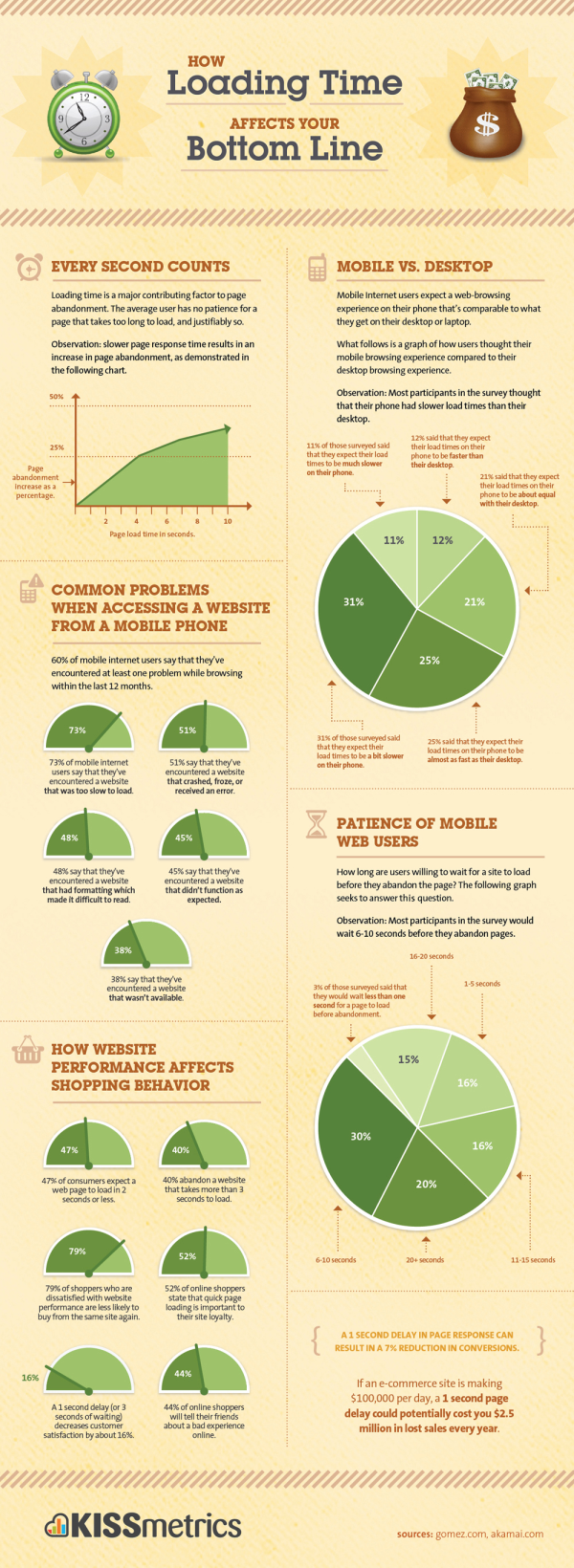
A study done by Gomez showed that the average online shopper expects a page to load in 2 seconds or less and after 3 seconds, up to 40% of viewers will leave your site. Test the load speed of your website for desktop and for mobile using tools such as Load Impact. Make sure all of your images are the right size and file format so that they load quickly. For more information on how loading time affects your website, check out the infographic below from Kissmetrics.
Design
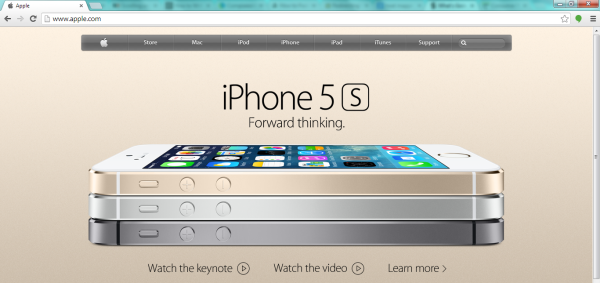
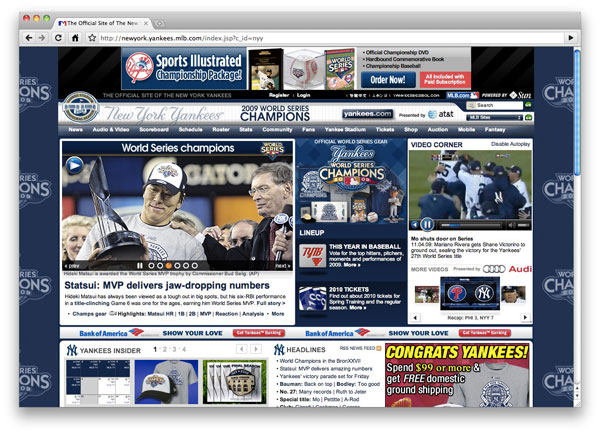
There are a few aspects of website design that can contribute to a failed “Blink Test”. It probably goes without saying that a stunning website is more likely to keep people on the page than a poorly designed page. Overall, the site needs to be aesthetically pleasing if you have any chance of keeping viewer there. Navigation is another key aspect of design that contributes to bounce rate. If the site is not intuitive or easy to use, people will get frustrated and leave. Finally, make sure the site is optimized for mobile devices and tablets. Bringing mobile users to a desktop version of your site is a surefire way to see some bounces.
Which site would you prefer from a design standpoint?
Or
Content
Content is king. I know, that phrase is very close to being overused but in this case it is true. A strong and informative headline is key. According to Copyblogger, 8 out of 10 people will read the headline copy but only 2 out of 10 will read the rest of the page/article. The headline should be engaging and should clearly portray what your company does and your value proposition/point of differentiation. You should also pay attention to the organization of the content. The most important information on your page should be above the fold because that is where 80% of web users spend their time looking according to Nielsen Norman Group. This important information includes what your company does, a call to action, your value proposition and anything else that visitors need to know to understand your brand.
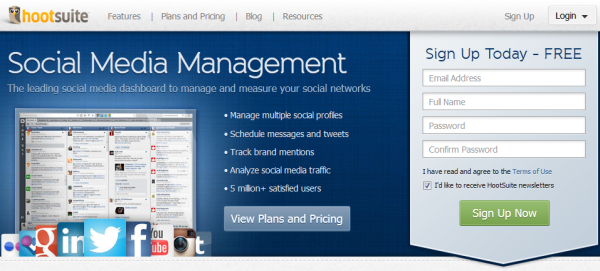
In addition, the content should be easy to understand. Make sure you chose your tone and language very carefully based on your target personas. Avoid using industry jargon if you don’t think your persona will readily understand it. Focus your language on your audience not only in the type of tense you use but also in your voice and tone. Does your persona prefer a formal tone or a more relaxed on? Should the copy by humorous or serious? These are just some questions you should be asking yourself when developing content to keep the right visitors on your site.
Credibility
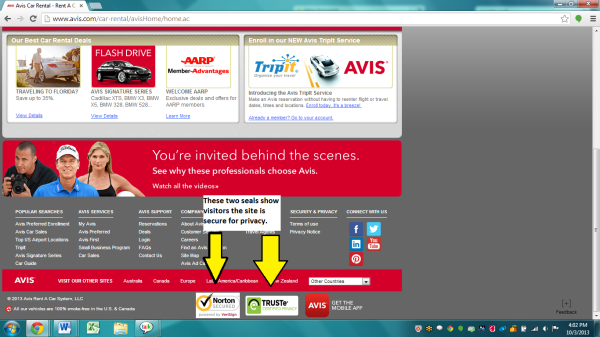
For all the good things accomplished by the internet, people are still wary and concerned about their online security, rightfully so. If someone goes to a website that does not look legitimate or credible, you can’t blame them for leaving after 3 seconds. Your site should convey credibility by presenting professional and trustworthy information that will put visitors at ease such as testimonials, reviews, privacy information, etc.
Make the most of those 3-5 seconds!