
[Check out our previous blog post to refresh: Make Social Media Marketing a Must ]
So we know how to get started in Social Media now (though, starting isn’t the hard part), but getting some perspective is key.

Social media should be strategized differently for each company that utilizes it in order to achieve the best possible results. It’s the same as your resume; you need to shift and alter it to fit each job or focus. It should also be noted that social media, in a marketing sense, isn’t the best form of marketing for every business. You need to figure out your approach and alter it to best suit the needs of your company and clientele. Having said that, let’s look at some major companies/brands and how their approach to social marketing has changed the way they do business!
As we’ve said (and will continue to say!), one of the ways bigger brands use social media is to connect with their customer base on a human level. From the perspective of the customer, larger companies such as Best Buy or Ford can be intimidating in terms of communication. By integrating their social media campaigns to reflect a conversational tone, these companies can not only respond to customer feedback, but also show that their company is made up of real people and not just automated responses. People today are less and less trusting of companies, so marketers are attempting to humanize their brands, and what better way to do that than using live people?
A study recently conducted by Burson-Marsteller found that almost 80% of Fortune 100 companies use at least one of the most popular social media platforms, i.e. Twitter, Facebook, or YouTube. The study concluded that Twitter is the most popular choice among the Fortune Global 100. 65% of the 100 largest international companies have active accounts on Twitter, with 54% on Facebook and 50% using YouTube.
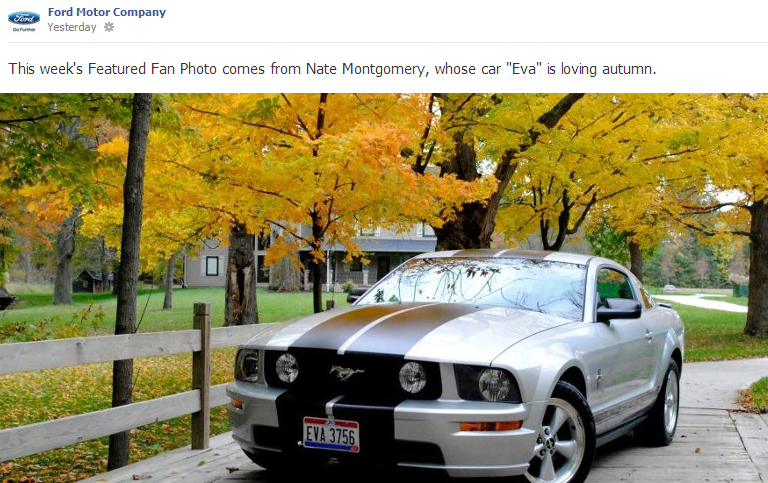
Ford Motor Company, for example, maintains several social media accounts in order to connect with their fans. On Facebook alone, Ford has about 1.7 million followers that they integrate into their community, and in turn, their marketing. Ford uses posts such as “Today in Ford History” to tell stories of their working class roots in order to garner greater interest. They also post “Fan Photos of the Week” which promotes the participation of their community, which helps to keep their page fresh and engaging. By operating under this principal, Ford lets the fans market for them. Followers also post “Mustang Stories,” which are short anecdotal stories that combine the best of both worlds, detailing the freedom and power that comes with owning your first car. The number of major firms that embrace Facebook is up 8 percent over 2011 (66 percent versus 58 percent), so it’s smart of Ford to be embracing their place on the social network.
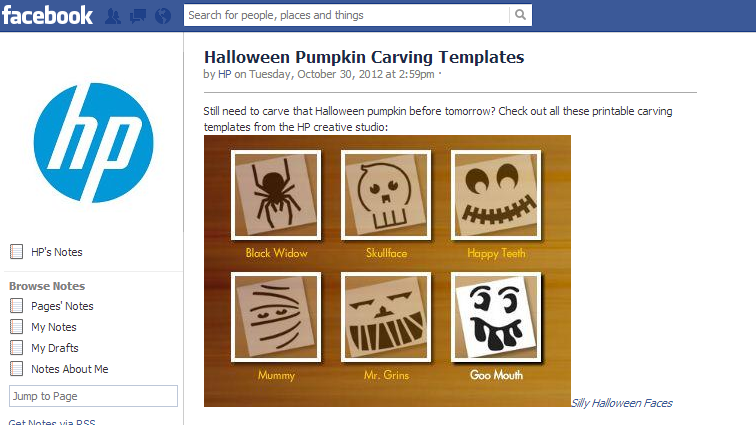
HP (Hewlett-Packard) has their own unique focus in their approach to social media, placing most of their value on innovation and education. While promoting themselves and the technology they’re currently developing, they also spend a lot of time integrating their followers into their work. This Halloween, HP posted a variety of fan-inspired pumpkin carving contests, using their own Pumpkin Carving Templates that print perfectly on their machines, which adds more visits to their site both practically and purposefully. A lot of their networking focuses on the different applications for their printers but they also engage their customers in fun, quirky ideas which gives their pages that personable touch.
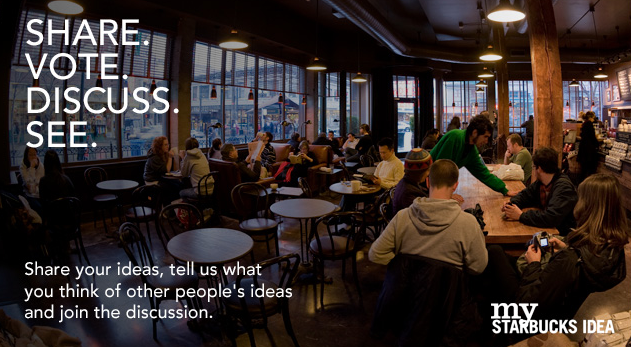
Starbucks uses their social media outlet as a way of engaging the customers who enjoy Starbucks, but need that extra push to get them in the store. Starbucks often posts free giveaways or coupons to get those ‘will-they-won’t-they’ customers to grab that extra cup of Mocha Latte. Their most successful marketing campaign, however, is “My Starbucks Idea,” a creative site that allows users to submit their own ideas and thoughts about what they want from Starbucks and what they need to do to make the chain better. Fans vote on the best ideas, which Starbucks reveals through Facebook and Twitter. It makes their customers feel like they have a voice, and with 3 million followers on Twitter alone, that voice wants to be heard! Soon after, they started a blog titled “Ideas in Action,” which actively updates the most voted ideas posted by consumers and the progress of those ideas as they’re put into action which is good, because this year's report shows large companies have increased their use of blogs by 5 percent—with 28 percent actively blogging in 2012 compared to 23 percent last year.
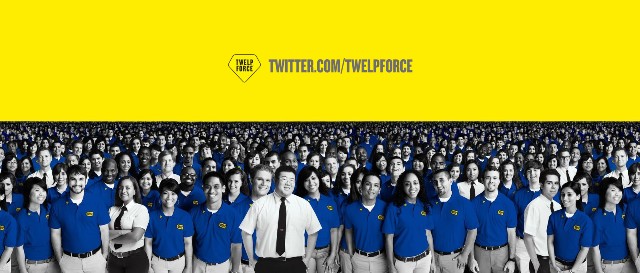
Best Buy uses their social marketing strategy different than a lot of other companies, with Twitter as their most practical application of the medium. Their Facebook is generally used to promote new products such as movies, games, or computers, but nothing game changing other than an occasional gift card contest. Their true innovation lies in their “Twelpforce,” a Twitter program that uses Best Buy employees to offer advice and answer questions posted by consumers about electronics, or tech-help. Up to 3,000 employees actively tweet answers to questions about technology, programs, or anything they can help with, which is swiftly establishing Best Buy as more than just an electronics store. The company relishes their opportunity to become a trusted source in the tech industry, by using their personal approach as a reach for frustrated consumers.
These companies are being proactive in their use of social media marketing, using creativity and tact to stake their claim on the endless possibilities that social marketing can offer. Once you have the customers on your side, the ball is truly in your court but getting there is a game in itself.
Follow My Ramblings On Google+